

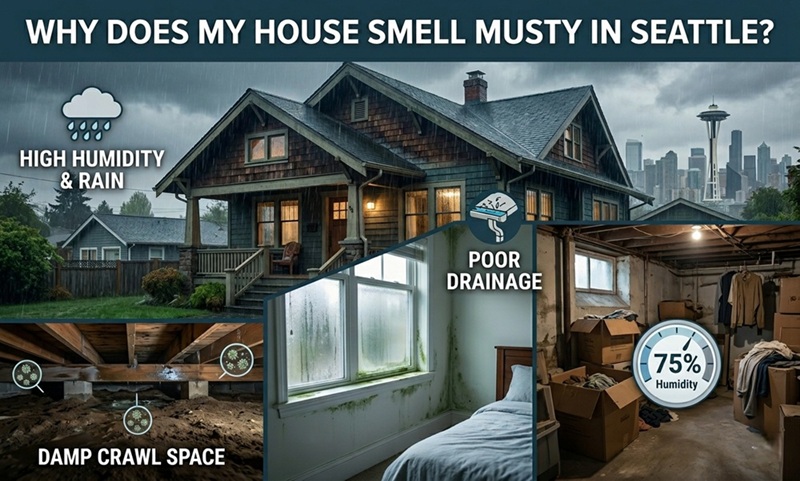
Seattle is a beautiful city, but its climate is basically a recipe for musty smells. With over 150 rainy days per year and persistent gray skies from October through May, homes here face moisture challenges that residents in drier climates simply don’t encounter. If your Seattle home smells musty — especially after a long rainy stretch — you’re dealing with a moisture problem, and it needs attention before it becomes a mold problem.
Here’s how to identify the source and get your home smelling clean again.
Why Seattle Homes Smell Musty
Musty odors are almost always caused by mold or mildew — or the conditions that breed them. In Seattle, those conditions are everywhere: poorly ventilated crawl spaces, condensation on single-pane windows, and humidity that never fully dissipates between storms.
Most Common Sources:
- Crawl space moisture — Seattle homes with vented crawl spaces trap ground moisture that migrates upward
- Bathroom and kitchen exhaust fans venting into the attic instead of outside
- Basement flooding or slow seepage after heavy rain
- HVAC systems with dirty or moldy coils circulating musty air
- Hidden leaks under sinks or behind shower walls
How to Find the Source of the Musty Smell
- Start with the crawl space. This is the #1 cause in Seattle. Open the access hatch and smell. If the odor is strongest there, you’ve found your culprit.
- Check the bathroom after showering. Stand outside the bathroom door. If the musty smell intensifies after someone showers, your exhaust fan isn’t doing its job.
- Smell near HVAC vents. If the smell is stronger when the heat or AC runs, the issue is inside your ductwork or air handler.
- Look for discoloration. Black, green, or gray staining on walls, ceilings, or grout lines confirms mold growth.
Solutions That Work in Seattle’s Climate
Crawl Space Encapsulation
This is the single most effective fix for musty Seattle homes. Encapsulating your crawl space with a heavy-gauge vapor barrier and adding a dehumidifier eliminates ground moisture before it rises into your living space. Many Seattle homeowners see dramatic results within weeks.
Improve Bathroom Ventilation
Replace old bathroom fans with ones rated for your bathroom’s square footage — most cheap builder fans are underpowered. Ensure the duct runs outside, not into the attic.
Run a Dehumidifier
A whole-home or basement dehumidifier set to 50% relative humidity prevents mold from establishing itself. This is essential in Seattle from October through April.
Check and Clean Your HVAC System
Have your air ducts professionally cleaned and your evaporator coil inspected. Mold in ductwork is a common and overlooked problem in Seattle homes.
Pro Tips
- Use moisture-absorbing products like DampRid in closets and enclosed spaces during rainy months
- Crack windows slightly when cooking or showering if outdoor conditions allow — cross-ventilation helps dramatically
- Check caulking around windows and tubs annually — Seattle’s temperature cycling degrades caulk faster than in warmer climates
Common Mistakes to Avoid
- Masking the smell with air fresheners — this doesn’t fix moisture; it just delays damage
- Ignoring crawl space vents that are blocked by landscaping or debris
- Running bathroom fans for only 5 minutes — fans should run for 20-30 minutes after showering to fully clear humidity
FAQs
Is a musty smell in a Seattle home always mold?
Not always — mildew, dust in damp conditions, and certain building materials can also produce musty odors. However, the underlying cause is almost always excess moisture, which does create mold risk.
How much does crawl space encapsulation cost in Seattle?
Typical Seattle quotes range from $3,000 to $8,000 depending on square footage and condition. Many homeowners recover the cost through lower heating bills and prevented structural damage.
When should I call a mold remediation specialist?
If you see visible mold covering more than 10 square feet, or if the smell persists after addressing moisture sources, call a certified mold inspector.
Conclusion
A musty smell in a Seattle home is almost always a moisture story. Start with a crawl space inspection, evaluate your bathroom ventilation, and consider a dehumidifier as your first line of defense. Seattle’s climate isn’t going anywhere — so building your home’s defenses against moisture is a long-term investment, not just a quick fix.
